
Crypto Has a Trust Problem: Why Everyone Thinks It’s a Ponzi and How We Fix It
Blockchain may be one of the most important technologies of our lifetime—but unless crypto can rebuild trust, shift from speculation to participation, and reward real value creation, mass adoption may remain permanently out of reach.
Crypto has a trust problem because, frankly, much of the industry earned it.
The technology is revolutionary. The behavior around it often hasn’t been.
The Reputation Problem
When many people hear “crypto,” they think:
❌ Scams
❌ Rug pulls
❌ Pump-and-dumps
❌ Memecoins
❌ Influencers shilling worthless tokens
❌ Hacks and stolen funds
❌ Ponzi schemes
❌ Gambling
❌ Fake promises
❌ Anonymous founders disappearing
To the average person, crypto doesn’t look like innovation.
It looks like a casino.
The Industry’s Biggest Problems
1. Speculation Dominates Utility
Most projects launch with:
Token → Hype → Pump → Dump
Very few ask:
- What problem are we solving?
- Why does this token need to exist?
- Would people use this product without a token?
The industry optimized for market caps instead of usefulness.
2. Attention Is Rewarded More Than Value
In crypto:
The loudest people often win.
Not necessarily the smartest.
Not necessarily the builders.
This creates perverse incentives:
- Fake engagement
- Manufactured narratives
- Influencer manipulation
- Short-term thinking
The market rewards storytelling faster than execution.
3. Trust Is Almost Nonexistent
Crypto requires people to trust:
Anonymous founders.
Anonymous developers.
Anonymous communities.
Anonymous smart contracts.
Meanwhile, billions have been lost.
Trust became expensive.
4. Too Much Complexity
Try explaining:
- Wallets
- Seed phrases
- Bridges
- Gas fees
- L2s
- Rollups
- Staking
- Restaking
- Liquidity pools
to your parents.
Most people can’t.
Technology adoption happens when complexity disappears.
Crypto still feels like using the internet in 1994.
5. Everyone Wants the Number to Go Up
Many communities are built entirely around:
Price.
Not products.
Not missions.
Not utility.
Not relationships.
Just price.
Communities built solely on price usually disappear when prices fall.
6. Lack of Accountability
Traditional companies have:
- Regulations
- Customer support
- Legal recourse
- Public management teams
Crypto often has:
Anonymous founders.
Discord moderators.
Telegram admins.
Memes.
That doesn’t build trust.
The Real Problem
Crypto has a technology problem.
But even more importantly…
Crypto has a human problem.
Blockchain solved:
Decentralized trust.
It didn’t solve:
Human greed.
Human manipulation.
Human dishonesty.
Human short-termism.
Why People Call Crypto a Ponzi
Because many projects unfortunately look like one.
The pitch often becomes:
Buy because someone else will buy.
Hold because number go up.
Invite friends.
Wait for exchange listing.
Repeat.
That isn’t investing.
That’s speculation.
And sometimes it’s worse.
The Great Irony
Crypto may be one of the most important technological inventions of our lifetimes.
Yet much of the industry spends its energy:
Trading dog coins.
Launching copycats.
Arguing on X.
Chasing narratives.
The signal is buried beneath noise.
How Do We Fix It?
1. Build Real Products
People trust products.
Not whitepapers.
Not roadmaps.
Not promises.
Build things people actually use:
- Payments
- Gaming
- AI agents
- Identity
- Communities
- Education
- Marketplaces
- Creator economies
The product should matter more than the token.
2. Make Tokens Represent Participation
Most tokens represent speculation.
What if they represented:
Contribution.
Learning.
Helping.
Building.
Teaching.
Creating.
Engaging.
This changes everything.
This Is Where DEOs Become Interesting
A DEO (Decentralized Engagement Organization) asks a different question:
Instead of:
“How do we make the token pump?”
Ask:
“How do we make participation valuable?”
Reward:
✅ Learning
✅ Creating
✅ Teaching
✅ Moderating
✅ Building
✅ Helping
✅ Referrals
✅ Community contributions
Suddenly:
The token becomes a coordination layer.
Not just a lottery ticket.
3. Radical Transparency
Every project should have:
Public treasury.
Public wallets.
Public metrics.
Public roadmaps.
Public milestones.
Public governance.
Show:
- Cash
- Revenue
- Users
- Retention
- Engagement
- Progress
Trust compounds through transparency.
4. Reputation Systems
Crypto needs reputation.
Imagine founder profiles showing:
Years building.
Projects shipped.
Community ratings.
Contribution history.
Wallet reputation.
On-chain resumes.
The industry desperately needs trust scores.
5. Make Crypto Invisible
Most people shouldn’t need to know they’re using blockchain.
Nobody asks:
“What database does Uber use?”
Nobody cares.
People care about outcomes.
The winners will make blockchain disappear behind great experiences.
6. Reward Long-Term Behavior
Current incentives:
Pump.
Dump.
Leave.
Future incentives:
Build.
Contribute.
Stay.
Participate.
Create.
Help.
Communities should reward:
- Years of participation
- Contributions
- Reputation
- Positive behavior
7. Build Communities Around Missions
The strongest communities are not built around money.
They’re built around:
Identity.
Purpose.
Belonging.
Shared missions.
Bitcoin succeeded because it became:
A movement.
Ethereum succeeded because it became:
A builder ecosystem.
The next generation of projects may succeed because they become:
Communities with ownership.
The Opportunity Nobody Sees
Crypto doesn’t need another token.
Crypto needs trust infrastructure.
Trust may become the biggest industry in Web3.
Projects that can answer:
“Why should I trust you?”
will eventually dominate.
The DEO Opportunity
I believe the future looks something like:
From Speculation → Participation
From Trading → Contribution
From Users → Owners
From Followers → Builders
From Communities → Economies
The biggest opportunity in crypto may not be another blockchain.
It may be learning how to coordinate millions of people around meaningful missions and allowing them to own part of what they build together.
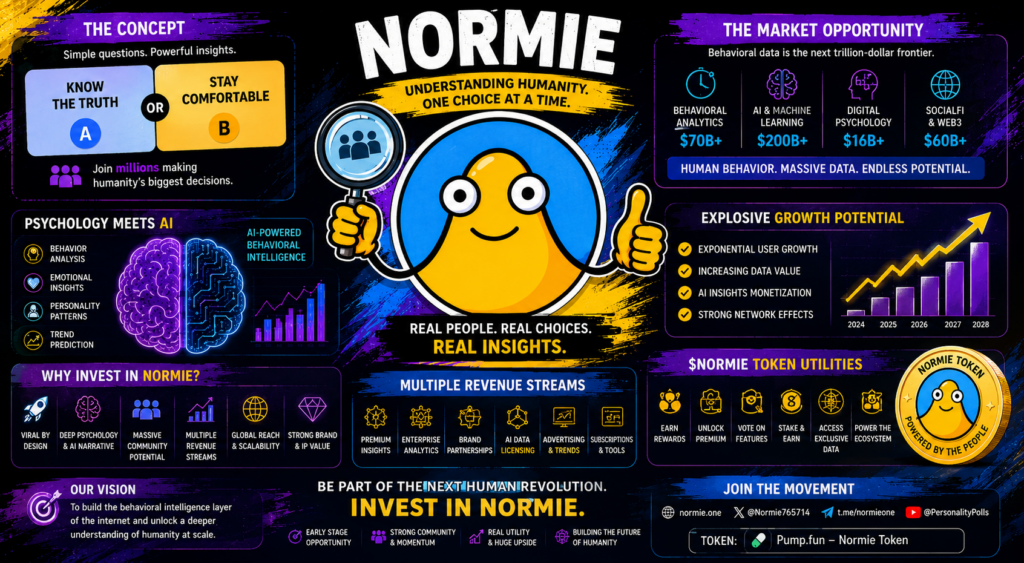
What if your attention, opinions, and contributions actually had value?
Normie is a DEO (Decentralized Engagement Organization) where people don’t just consume content—they help create it, shape it, and own part of it.
Learn. Create. Engage. Earn. 🚀🌎